Friday, August 9, 2019

“Untreated Al-Anon”

Alcoholism and addiction are a ‘family disease’.  Addiction doesn’t just affect the individual but is a systemic and community problem.  There was a time when the idea of ‘schizophrenogenic mother’ existed in the literature. This was countered quickly by the recognition that mothers of schizophrenics were more likely ‘reactive’ than ‘creative’. Still the dynamic existed. 
 In addiction matter was more pronounced because the ‘system’ that developed in response to the addiction whether ‘primary’ or ‘secondary’ could impact recovery for the individual. At the worst it could contribute to relapse.
“If I could genetically paint ‘untreated al anon’s’ day glow orange and follow them I’d guarantee they’d identify any potential alcoholic better than any tests we have to date,” he told us. A leading expert in addiction with years of experience.
“Al anon’s have a peculiar attraction to the alcoholic either after or before the disease manifests fully.” He said.
In an attempt to understand this phenomen Transactional Analysis researchers noted that alcoholics appeared to have an ‘overdeveloped’ ‘child’ function while Al Anon’s had an ‘overdeveloped’ parental function. In Transactional Analysis each individuals was considered to have three modes of functioning, Parent, Adult and Child.  
The research collectively into addiction concluded that researchers perceived addicts as ‘emotional immature’ or ‘underdeveloped’.  On the developmental scale hypothesized by child psychiatrist Anna Freud from the natural narcissism of the baby to the wise altruism of the mature adult, it appeared addicts and alcoholics were fixated or regressed to an earlier developmental stage than their cohort.
Addicts and alcoholics ‘emotional age’ appears commonly ‘adolescent’.  
Meanwhile ‘untreated Al Anon’s’ appeared to be similiarly underdeveloped but in a different though complementary way.  In the classic scenario the ‘untreated al anon’ was under developed in the child function or mode and over developed in the parental mode or function. Often they ‘mothered’ other adults and appeared to need the alcoholic to have ‘fun’ or ‘purpose’ or ‘meaning’.  
As one recovered researcher put it simply, “They have a very peculiar attraction to us and often resist our recovery because it points out the depth of their own disease and peculiarity.”
In the studies of ‘character’ this historic religious ‘sins’ have been secularized. Indeed the whole notion of ‘character’ and ‘morality’ were developed long before psychological or scientific interest in ‘human traits’.  All religions and cultures developed a characterization of what was a ‘good’ versus a ‘bad’ person. There was inherent as well an idea of what was a ‘child’ and what was an adult.  These became enshrined later in the literature, religion and philosophy of different communities. 
The seven ‘cardinal’ or ‘deadly ‘sins’ or ‘vices’ were 
1. Pride
2. Greed
3. Lust
4. Envy
5. Gluttony 
6 Wrath
7. Sloth.
In the church the gender joke is that the worst of the ‘church ladies’ are gluttonous, loveless, envious and prideful while their husbands were gluttonously drunk and slothful with pride and greed. The distinction between the church’sinner’s and the non church individual was that those in the church acknowledged their ‘imperfection’ and were doing something about it. The joke with the alcoholic falling off the bar seat at the bar is he proudly says ‘I don’t have alcoholism. I’m not going to Alcoholics Anonymous.” He says as he has his umpteenth drink and pukes before passing out. 
The 12 step programs which developed originally in western culture building on the substrate of what it was to be good or mature seeing  ‘pride’ like the Greeks and Roman’s of old as ‘hubris’ or most deadly’. “Pride goest before the fall’. In the jargon of the psychology of addiction alcoholics and addicts were described and described themselves as ‘egomaniacs with inferiority’ complexes.”  They lacked the capacity to be ‘right sized’. 
Socially they felt uncomfortable finding it difficult to ‘chill’ or ‘fit’ or ‘feel comfortable in their own skin.”  In modern terms they commonly suffered ‘social anxiety’ and both untreated al anon’s and ‘alcoholics’ were commonly diagnosed as ‘bipolar disorder II” or ‘Anxiety disorder’. Indeed the ‘genetic trait’ most associated with the ‘disease of addiction’ was anxiety which , expressed as either anxiety or hypomanic moodiness, an irritability as opposed to sadness seen in unipolar depression.
This sense of ‘terminal uniqueness’ seen with the ‘alcoholic’ whose ‘love song was ‘I did it my way’ was expressed similiarly with the untreated al anon as a different kind of ‘uniqueness’. 
Often marriage therapists see couples as being ‘one up’ or ‘one down’ and that this tendency to ‘see saw’  in relationships was seen in the ‘bickerson’s.  The famous family therapist and originator of ‘relationship therapy’  Virginia Satir showed this with her “human sculpting’  Couples lacked ‘reciprocity’ and ‘balance’ and showed  their fixations and preferences for ‘self pity’ or ‘superiority’.  
Individuals who had childhood trauma were as likely to ‘recreate’ the ‘trauma’ or to ‘seek the traumatic situation’ in an attempt to ‘win’ in the interaction later in life.  
One of my patients who was best described as an ‘untreated al anon’ actually found three different men with untreated alcoholism all who had a ‘mom’ tattoo. No small feat. In each relationship she was abused recreating and attracted to the same model of family she’d grown up in.  It was what she was familiar with. Only with in depth therapy was she able to engage in a ‘higher level’ of interaction without the anger and violence.  She married a man in recovery eventually who didn’t have a. ‘Mom’ tattoo but he still had  a whole lot of tattoos.  She had naturally attempted to get him to hit her because she’d learned that was the way the previous men in her life gave attention and ‘showed love’.  Despite the rocky start the relationship continued a bit boringly as the man had no desire to ‘hit a woman’ in recovery.  Obviously alcohol and drugs are the principal contributor to domestic violence but without the fire starter and fuel for the fire, the underlying predispositions remain.
Opposites are less likely to attract than ‘complements’.  
Al Anon teaches that the  ‘controlling’ , ‘perfectionism’, ‘anger’, ‘pride’, ‘manipulation’ are characterological  of the  ‘untreated’ and persist in stealing the joy from the individual and relationship.  The untreated al anon is ‘fearful’ and ‘anxious’.  They historically were attracted to the alcoholic because early alcoholism is commonly associated with the appearance of ‘confidence’ and ‘courage’ which later is recognized as the clay feet of  ‘liquid courage’. In the prefrontal  phase of alcoholism the alcoholic is successful and some appear the ‘life of the party’.  If they are able to ‘curb’ their tendency to drink in their early adult years they commonly go on to be highly successful.  However a sub set who express the disease of alcoholism will be unable to moderate their alcoholism with the result being the full blown illness develops..  This leads to ‘early death, institutions or insaniety’.   
The untreated al anon will not uncommonly follow them along this journey out of ‘love’ or ‘fear’.  Indeed untreated they ‘enable’ and ‘worsen’ the progress of the disease often ‘killing with kindness’, lacking the capacity to ‘detach’. A foundation of the al anon group is to teach the principle of ‘detach with love’ .  Al Anon family groups have noted the difference between ‘co dependence’ and ‘inter dependence.   
Melody Beattie’s work with alcoholics, addicts and those with those traits lead to the group call ‘Co dependent’s anonymous’.  As is often the case a healthy trait is somehow ‘twisted’ to be ‘unhealthy’.  Inter dependence, with division of labour and mutual reliance for the normal couple especially the longer they are together is ,somehow perverted in addiction to become a ‘fear based’ and ‘desperate’ co dependence’ . Erickson in his classic,  the Art of Loving,  distinguished the ‘immature’ or ‘adolesnce’ unstable condition of ‘falling in love’ with he more mature and adult ‘love’ of ‘standing in love.’   The untreated al anon has difficulty moving from ‘sentimentality’ to ‘deep love’. Their ‘anxiety’ which attracts them to the alcoholic and addict who themselves is ‘deeply anxious’ needing increasing amounts of substances to address their increasing anxiety,  
The substance the untreated al anon is attracted to is the ‘addict or alcoholic’ . They are addicted to their ‘project’, this ‘fixer upper’,  the idea of their egotistical notion that they ‘caused’ or “created” or can ‘fix’ this other often comes from the trauma of their own childhood.
In al anon a fundamental teaching is called the ‘three c’s’ .  “We didn’t CAUSE it; we can’t CONTROL it; We cannot CURE it. “. So ‘We can’t COMPLAIN; We Don’t CRITICIZE; We don’t CONTROL
Part of the message of al anon is that the untreated al anon has tended to ‘blame’ and ‘distract attention’ from themselves to the usually more ‘overtly’ obvious ‘character defects’ exposed in the alcoholic or addict.  Historically they were ‘the long suffering one’.  
However, that historic ‘parent child’ fixation, the ‘good mother and bad boy’, of ‘alcoholic co dependency’ was challenged by the early ‘al anon’s’ who found that rather than finger pointing and tongue wagging what was needed was for the untreated al anon’s to develop emotionally themselves and ‘lead’ They learned to become  part of the ‘solution’ rather than persisting as part of the ‘problem’.  
In the Al Anon group and family experience the Al Anon addressed their own ‘social anxiety’ and ‘Co dependency’ finding support and confidence in community relationship through work psychologically on their own issues of ‘pride’ and ‘fear’ and ‘anxiety’ . They also identified the  common ‘process’ addictions which became more apparent in the ‘al anon’ community. Gluttony, obesity, lack of self care, lack of exercise, isolation, negativity, depression, all were ‘personal’ issues which needed to be addressed individually rather than ‘explained’ or ‘blamed’ on the ‘alcoholic’.  
In psychiatry the idea of ‘locus of control’ has long been a central concept because developmentally individuals and cultures tend to remain fixated as long as they interpret the problem as ‘somebody’s elses’.  Indeed the whole ‘legal system’ and ‘political system’ capitalize on this human tendency to ‘blame’ and indeed ,in some venues, this is true. War is a failure of diplomacy.  The world and humans in general are not perfect . 
The whole of therapy however developed from the model that an individual could first change and that this change would lead to change in the environment around them.  As long as I consider the problem is an SEP, ‘somebody else’s problem’,  I don’t have to change myself. However if as an adult I identify my own problem and look at my choices I can be proactive, created and get out of the rut I am in. 
The focus of Al Anon is ‘choice’. The al anon who is treated moves from ‘dependence’ on their ‘unreliable’ alcoholic partner to ‘independence’ by developing the skill or ‘detaching’ from the ‘unreliable dependence’. An example would be the alcoholic drives but is so hung over they fail to drive the al anon to work so there is recurrent complaints because the al anon is late to work ‘because of the alcoholic’.  This ‘argument ‘persists for years’ . When the untreated al anon joins al anon an older or more experienced woman or man would simply ask ‘why don’t you get your driver’s license’.   That is a ‘choice’ and moves the problem out of the adolescent realm of “I’m right, they’re wrong’ into ‘solution focused’.  Of course the untreated al anon would say “why should I have to change since I’m not the problem’ The irony is that the alcoholic in morbid parallel always says “why should I change, why can’t everybody else cut me some slack’.  They’re two peas in a pod. 
Often their ‘fight’s’ are the ‘passive or covert aggression’ what has some times been called ‘female agression’ coupled with ‘active, overt, or male’ aggression.  Siege and Charge tactics in the living room and bed room.  
Both Alcoholics/addicts and untreated al anon’s resist the formal group or ‘community involvement’. The family is commonly full of ‘secrets’ and both have difficulty ‘sharing’ or ‘asking for help’ at the community level. 
The alcoholic and addict has an ‘unrealistic’ dependence on their partner resulting in the joke that the mating call of untreated alcoholics and addicts is ‘’would you be my mommy?” Or ‘would you be my daddy?”  Developmentally they have difficulty moving from adolescent to mature adulthood.  Similarly the untreated alcoholic or addict expects their ‘emotional needs’ to be met in the ‘nuclear family’ with the result that the ‘children’ commonly become the ‘parents’ of the untreated alcoholic or the untreated ‘al anon’.  “Mommy was always depressed and anxious so we kids had to not upset her.  We had to take care of her because of Daddy’s drinking’.  In this classic scenario the children loose their childhood because the alcoholic and the al anon are ‘stuck’ developmentally in ‘adolescence.’  
The organization Adult Children of Alcoholics came to exist because of the ‘neglect’ that the children of ‘alcoholic homes’ experienced because of the immaturity of both parents. 
Transactional analysis family studies showed that the ‘untreated al anon’s’ had severe deficits in their own capacity to ‘have fun’ and self soothe’. They not uncommonly developed later life process addictions such as over eating, gambling, financial mismanagement, debt, overspending sexual acting out. They appeared to lack a capacity for ‘self soothing’.  Commonly Al Anon members in their first year and doing the ‘steps’ of Al Anon will describe ‘feeling joy’ for the first time or the first time in many years.  They commonly describe living life as ‘white knuckling’ it or ‘being ‘grim’.  They often don’t like other adults and prefer only being with children. They are comfortable in the ‘care giving’ mode but don’t really like being cared for’. They have deficits of true sensitivity but are very good at ‘maintaining the appearances’.  They ‘chameleon adult behaviour’.  They are ‘fine’ (Fucked inside, nice exterior - an acronym favoured in 12 step programs for the ability of both the untreated al anon and early untreated alcoholic for ‘keeping up appearances’. 
However, they lack ‘fun’.  Sexually they commonly have considerable inhibitions and difficulties not surprisingly because of the sexual difficulties known to alcoholism and addiction.  Given that the drugs or addictions negate performance the wife or husband of the addict or alcoholic will personalize the lack of bedroom pleasure rather than attributing it to the substance. Not surprisingly the addict or alcoholic who is taking a sexual performance deterrent will blame their partner for their lack of performance rather than the substance.  (In contrast to Hollywood where sexual difficulties appear the greatest due to the proliferation of alcohol and drugs, the sex lives of alcoholics and drug addicts are commonly least satisfying. It’s no surprise that Hollywood has such sexual deviance and ‘sexual addiction’s’ because of the drugs and alcohol impact on marriages, couples and performance. Hollywood presents the greatest lie, the truly FINE’
Alcoholic Republic is an excellent study of the effect of alcohol on the west at the cultural and community level. In the east opium had a similar impact, cocaine serving along with alcohol in South America and marijuana having its own problems when abused in other cultures.  
Al Anon recognizes that addiction and alcoholism is a family disease. The individuals who are impacted by alcoholism and addiction, the spouses, children ,adolescents, whether the addiction is active or in recovery benefit tremendously from the ‘community’ of Al Anon. In addition to adult Al Anon. There’s Al a Teen groups. 
Individuals and families were not meant to be alone but needed a ‘village’. The ‘nuclear family’ in the west associated with the wealth and prosperity physically is coupled with the emotional and spiritual deficits of isolation.  Misery loves company. A problem shared is a problem halved.  Al Anon serves to address the existential anxiety of human existence with individuals coming together to help their shared problem.  
Untreated al anon’s are ‘needy’ and ‘draining’ with jealousy, control and criticism. Just like untreated alcoholics and addicts are emotionally painful with their unreliability, criticism, irritability and moodiness.  By contrast those in recovery are noted by their joyfulness and creativity.
Biblically the ‘gifts of the spirit’ are described as charity, joy, peace, patience, kindness, goodness, generosity, faith, modesty, self control. Being with some one in long term recovery in Al Anon is as much a ‘good feeling’ as being with someone in long term recovery from drugs and alcohol.  There’s a calm and confidence that fulfills.  It’s also been described as ‘graceful’. Al anon’s in recovery are especially ‘graceful.’  Their relationships and lives have a special ‘quality’ that especially to themselves was missing when they were not part of this greater whole called ‘recovery’.  Al Anon’s in recovery really are loving in the deepest sense and special in the traditional family and community sense. 


Thursday, August 8, 2019

Political Poem

The insaniety persists. The bars on the asylum still hold
Media pounds on the doors to be let in
The government riots
The people are safe under the beds
Whirling dervishes
Meditating monks
The crosses around the neck
Religious symbols hidden
Secret rituals 
The obscene God of State destroys
Shiva socialism rules
Sharia socialism creeps
Beasts slouching towards Bethlehem
Lovers in a strange place
I am on the couch watching Netflix
Worrying who will fill my refridgerator
The rent is paid this month
The dog’s dish is full
The water is running
Strangers everywhere
I’m growing old
My friends are dancing.
I would be more like them
Laughing in the ballroom of the Titanic
Some idiot playing DiCaprio on the bow
Doesn’t see the Iceberg
But teaches climate change from his gas guzzling yacht
Killing bears spouting vegan rhetoric
The hypocrisy the hippie was turned onto
Is rampant on steroids
Who are these people
My couch has melded with my butt.
The Netflix binge continues
I long to wake in the woods in a tent
The treatment centre for the internet addiction
My dog has found his tennis ball
He is blind but smells the snakes
I’m watching slithering people
And wondering why I’m not looking at the babies
So many of them, hope and faith and cherish
Old men and women desperate for rents 
Landlord creation, put up parking lots,
Tax the air we breathe, sell the water,
It’s rude
Poor taste
Education wasted on soulless cretans
Beam me up, Scotty 
There’s no intelligent life on this planet
It’s a joke machine
Really ,life and death
A matter of humor.
We pathos
Tragedy and comedy
Heaven is a place of joy
All has it’s purpose
There are no mistakes
Acceptance is the answer
She doesn’t love me
He doesn’t care
We all do
Life is love.
Face it.
A world of two year olds
Pout. 

Wednesday, August 7, 2019

Morning poem

I love your curves
All of them
The ones you like 
And the ones you don’t.
I love the lines
I love the crevices
I love your eyes
I love your smile.
I love the feel of you in my arms
Kisses
Cuddles
All the sex
All the bed play 
And the secrets
The mystery
The connection
The glances
The scent of you in the bed
Feeling better for knowing you
Less alone
Less afraid
Less uncertain.
I worry for your health
For the future
Wanting this conversation 
To continue for years
Broken only by song and dance
Something sacred
Something special
Like a Forgetten melody
A lyrical treasure
From a canyon in creation
Where the depth 
Touches the essence of my heart .
Radiant in recovery.
 

Tuesday, August 6, 2019

Gratitude Tuesday

Thank you God for IDAA and Knoxville. It was wonderful to see so many friends of so many years.  It’s the best reunion of ever.  Such brilliance and courage and inspiration!
Thank you for the safe return. Thank you for Gilbert and Laura and the Brunette River Walk.  Thank you for keeping everyone safe.  
Thank you for Facebook. I love to see the friends at Pride and the friends enjoying BC outdoors, in the woods and on the beach. I loved seeing the fish being caught. Help me to get out and do more things. I’m so at risk for lying on the couch at the end of the workday when I could be out doing more.  I loved swimming yesterday. There’s so much joy in activity and exercise.  I’m delighted with my bed, Lord. To come home to my mattress and sleep in heaven is heavenly. 
My Mini car was fun to return to.  Making plans for another trip was good too.  Now there’s studies to be done and exams to be taken but that’s fun too, pacing myself better, balancing works and relaxation. Thank you for meditation and prayer. 
Thank you for the colours. Thank you for the sights and sounds. Thank you for the hope of a space ship and new propulsion system and a vacation home on Mars with the creek and habitat.  Thank you for dreams.
Thank you for the 4th dimension and flow and the joy of synchronicity.  Thank you for love.
Thank you for Ethiopian coffee. Thank you for Canadian honey.  Thank you for BC cream.
Thank you for khaki shorts, tshirts and sandals. 
Thank you for my Harley. I think I’ll ride to work with Gilbert on the back today. Please keep us safe. 
Thank you for the healing of my knee and jaw. Thank you for campers and camping and the Canadian woods and wilderness campsites.
Thank you for round ups and gatherings and rallies and poker runs. 
Thank you for the old movies, last night’s Speed, with Keanu Reeves and Sandra Bullock. I didn’t remember the end and realized that those movies I loved 25 years ago will now likely be as interesting again as I really have forgotten some useful things to forget, the spoiler bits on books and movies.
Thank you for the happy face symbol.
Thank you for all the blessings .Thank you for this body and this life. Thank you for love and family and friends. Thank you for the babies and children and parents. Thank you for family. Thank you for community. Thank you for the light.
Thank you for music and song.
Thank you for church and meetings. Thank you for hotels and travel. Thank you for planes and clouds.
Thank you for all the wonderful miraculous experiences.  God is all and God is a loving personal God big enough for all.  Thank you for the reminder that too often my god is too small. Thank you for Phillips and thank you for the Hound of Heaven.  I’m am seeking you God in the greatest game of hide and seek.  I am the dog and I am the tennis ball. 


Monday, August 5, 2019

Enlightenment

In the joy of your being
My heart takes refuge
Your breasts nurture all creation 
I celebrate our presence
With hearbeats, chants and breath
The drumrolls of your meaning
Ring out in fragrance of pine and frankincense
I am euphoric, your hips birth ecstasy
The silence louder near to you
 I become a better version of myself 

IDAA 2019 Knoxville Tennessee, Part 2

It’s Sunday. I’m sitting in the Knoxville Market square.  I’ve just come from hearing Lori share her experience, strength and hope. She’s a humble heroine of the soul.  What an amazing story of hope,  growth and humor.  With epidemic suicide rates among doctors I’m so glad she found her way here.
 My personal nemesis has been sociopaths and psychotic people in power. I’ve fulfilled my contract, doing the best possible healing,  with the best training. I’ve served, reducing  “morbidly and mortality”, fighting disease and saving lives. 
Today that’s of little importance compared with ‘political correctness.’  Today,  the patient can die so long as the ‘chart’ lives. It’s all about spin and who you know. 
My police friend described her leaving the force saying, “I became a police woman to ‘fight crime’ . At the end end all I was allowed to do was ‘record’ crime’.  I feel like I joined the best hockey team in Canada. However today the  coach  only excelled in writing memos. Instead of firing coaches, doctors are required do more laps of the ice.
Lori’s challenges were family, sense of loss and betrayal traced back to childhood. I suspect my anti authority issue could relate to  being caned and strapped in school for ‘talking back’. 
 IDAA is always a time of deep reflection.  It’s not a place to ‘blame’ as much as I enjoy that. We discuss ‘choices’. 
In the psychiatry breakout meeting we talked of retirement, hearing among others, from my favourite retired psychiatrist,  his joy in welded art. Others talked of ways of winding down. Meanwhile the youngest heard  our stories and shared their own struggles with their new careers and their aspirations. 
It’s sadly the only place in the profession today that we talk openly and honestly without fear of retribution by the authorities or ‘loss of face’.  I attended the national medical meeting and enjoyed the didactic ‘fact’ lectures somewhat but felt so much ego. I was glad I’d worn my suit and tie. 
At IDAA most everyone wore shorts and Hawaiian shirts except for the banquets. The girls looked great in sun dresses. The ladies were so elegant. The group cleaned up well. Every conference there’s a thousand present plus or minus a hundred or so. Some 40,000 plus are active members. 
Saturday night banquet Merve gave the most succinct and moving banquet speech. He described his journey of recovery as a series of interventions  of divine and human love. He ended his extraordinarily miraculous talk with a quote from the Doobie Brother’s “Without love where would we be now?” “Without Love where would we be now!”. 

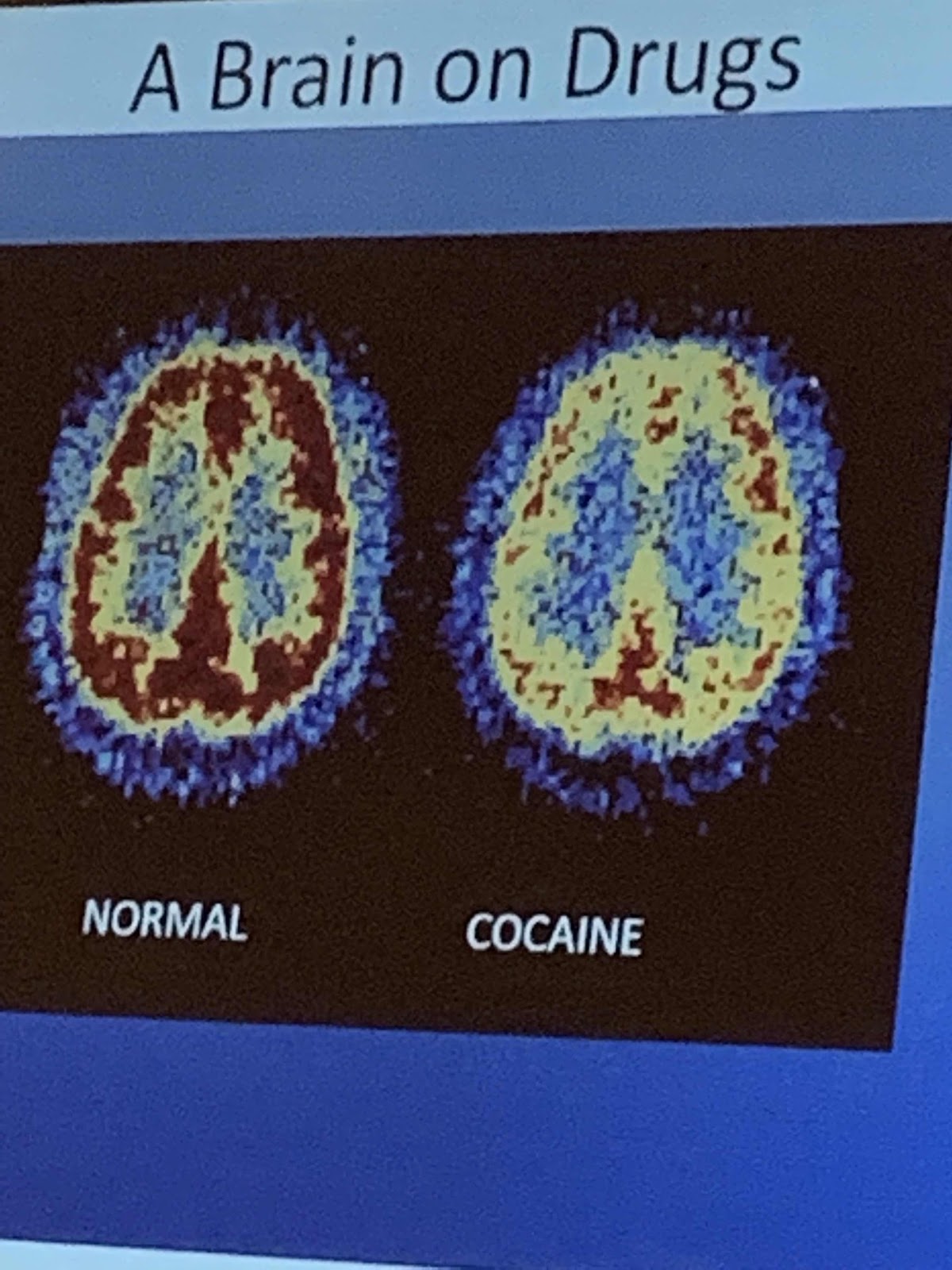
Of course,it was a medical conferenece too. That day I’d attended a terrific CME discussing reward centers, the amygdala, nucleus accumbens, the pre frontal cortex, and effects of dopamine and oxytocin. which drugs did specifically what. We even learned the genetic codes associated with predisposition to alcoholism. 
The Friday CME was especially good. I loved Dr. Michael Baron’s talk, Prescribing and Pain. In Tennessee the doctors prescribing opiates must attend two hours of CME on addiction and opiates. I was privileged to attend this, truly appreciating the combination of neuroscience , public health and common sense presented. 

Abstinence remains the treatment of choice  but Dr. Bill Haning's talk, Cultural Aspects of Addiction,  on Culture of Addiction emphasized that treatment  isn’t just stopping a substance but involves significant life changes to prevent relapse. The work addressed in this CME was about harm reduction and abstinence.  The speaker talked of the great benefits of AA fellowship but also discussed a variety of groups which also help. 

Having dealt with so much grief, such mind numbing, debilitating, heart rending sadness , I simply enjoyed the  Dr Jes Montgomery's talk on grief and recovery. It was healing personally and certainly gave me tools to help with patients.

Our small group discussion of illnesss and recovery, dealing with pain without opiates, avoiding relapse when opiates were needed post surgery, was highly informative.  I’d thought this group of doctors who were so good looking and smart were immune and immortal.  We all discussed  various illness we’d had and various treatments. .One had just had surgery. I’d had a dental implant. Another had arthritis.  It’s one thing to read  the textbooks some of which were written by people in the room, but a whole other thing to hear what people actually did.  

As a psychiatrist we learn about the ‘self’ , the false self, the ego, and  ‘persona’ . Quite frankly IDAA is the only place I really get to talk with other physicians,but especially psychiatrists. The other docs and specialists say it’s the same them..  I loved my colleague from a small town saying this was the only time he’d spoken truthfully and meaningfully with another psychiatrist in ‘years’.  

Training as an analytic psychotherapist  I’d early enjoyed bearing my soul and gaining  useful insights . But here it was even better because I knew that the psychiatrist I was sharing with had been divorced like me. No one claimed to have the answers here. No one was holier that thou. I just love the lack of hypocrisy. There certainly wasn’t any pomposity which seems to thrive elsewhere. 
Dick didn’t pretend he didn’t have feel pain walking. Cheryl didn’t conceal her love and concern. No one was just ‘fine’ (that’s an acronym which ‘fucked inside, nice exterior’ ).  Everyone’s hurting sometime. But here everyone knew that and also also shared their love and their joy. 
I heard the most wonderful stories of trips, travels, children and grandchildren, recovery and successes in work.I was so pleased my young Canadian friend was now on the national board. Several other docs I knew had completed fellowships, while others had become heads of programs and hospitals. 
Through the year I read about the ‘greats’ in our fields who I meet here.  World renown plastic surgeons and cardiologists with the rankest sense of humor continue to inspire me.  The most beautiful brilliant elegant ladies talking intimately about their disease and finally asking for help touch my inner being. I laugh and tear up more in these days than I do all year.
It was also so moving to be among the many there with incredibly long term marriages.  What examples these 30, 40 and 50 year married doctors provided. My friends Art and Carole have 53 years together but seem like high school sweethearts.  
I loved seeing Adam and Corinne when Corinne celebrated the Jerry Moe program sharing what it meant for her son. I loved seeing the Jerry Moe kids and the outrageous teens.  The babies and toddlers there represented hope and faith in the flesh.  
Overall I felt again I’d entered an adult learning place  of genius and creativity beyond the limited world of bean counters and administration that saw health care as commodity. I was able to discuss difficult patients and changes in treatment over coffee and in  hall way consults.  
The whole relevance of ‘sign in’ CME came up for discussion in our little group where the actual definition of a professional was so reminiscent of what I’d signed up for. “I learn from a patient. If someone comes in with something I don’t know, that triggers my research and consultation.  I don’t pay attention to all this other stuff that does’t apply to me and my area of work.”  The anesthesiologist shared.
That was exactly what I thought.   I will never forget administrative doctor shouting ‘doctors should never learn from patients’ they’re there to teach the patients’. By contrast,  at times over coffee,  it seemed like a ‘barter market’. I was sharing psychiatry jewels I’d been bequeathed to get in return dermatology pearls. This is the  way ‘adult professionals’ learn. But then we wondered if this only worked because we were in this IDAA bubble where it was okay to be to not know everything’, to be vulnerable, and to share. I joked about sitting at the ‘in table’ with Art and Dick and Graeme.  

It was fun to be at IDAA.  I emailed a friend who I hope to see at next year’s high school reunion saying, “IDAA  iwas like being at a doctors ‘ elementary school reunion’ . It could only be better if Jerry Moe and the kids let’s us join their program. All that was missing was the dance with the mirrored balls hanging from the ceiling.

Next year it’s Spokane. IDAA2020 Spokane.

I love the town of Spokane and already know some brilliant psychiatrists there.  I’m thinking of riding my Harley down and certainly wearing boxers even if they do ride up my ass.  I’m all signed up.  IDAA is like the love story “same time next year’.  
I know I’d never have been able to stay a doctor and especially a psychiatrist without IDAA.  I might not even be alive.  I certainly wouldn’t have this life beyond my wildest dreams.  I may not have the spaceship I want but I can truly say with the deepest gratitude I’ve had times of being rocketed into the fourth dimension.  I can’t wait to read the cyberdoc on line discussions (and gossip)  in the coming weeks.  I love hearing  Hugh, Nathan,  Zeke and Dave . I actually talked to two doctors Saturday  who had been to Antatica. One who worked there and the other wanted to see penguins. There’s something about belong to a group of doctors with characters like that.

God bless.


. 

Friday, August 2, 2019

IDAA 2019 Knoxville, Tennessee, Part 1

I enjoyed flying United despite Vancouver to Knoxville taking most of a day. I had reservations at the Hilton on Church Street.  Great rooms and service.  The Knoxville Convention Centre, 2 blocks away, is a fine venue for IDAA.  Lots of rooms, pleasant service. Good acoustics.
I arrived at the beginning of the New Comerr’s banquet. This always takes me back to my own first IDAA. Those stewing feelings, a keen mixture of fear and resentment, some curiosity, with a teeniest touch of hope.
This year was IDAA’s  70th anniversary.  The planning committee captured the history of the association with posters and presentation. I bought the book IDAA: The First Sixty Years 1949-2009 edited by Gordi Hyde MD.  I love the pictures as much as the text.
Clarence Pearson a friend of Bill Wilson’s, founded the organization in 1949.  I’d heard a lot about Luke Reed. I’ve personally been blessed to know the McKinleys, Hyde’s, Syferts and most recently the Metcalf’s.. 
Immediately I was hugging and being hugged by old friends. I’d already seen Nathan surrounded by young people at the airport.  Art and Carole and Bobbi and Tom always light up my heart.  Dick and Cheryl are so uplifting.  Graeme C. Randy A. Tommy, Traci, Jeff, Madeleine, Ryan, Merv,  so many others. Old friends just appear out of the heavens like so many angels. 
With a belly full of good food, great stories and recovery I slept well.  I joked that normally I spiritually crawl into this meeting on my belly. This time I was actually walking.  
IDAA makes it possible for me to practice medicine and psychiatry. The inspiration and like minded doctor experience has been essential. Thanks to Ray B. Toronto was my first meeting.  I met Hank, the Louisiana Psychiatrist there. For years till his death he’d ground me and inspire me.  When the system and powers were more psychotic that the patients I was treating his humour kept me going. 
Hal’s ‘Attitude of Gratitude’ meeting began 7 am.  I loved the stories people shared of Hal. He was so kind to me when I first came to IDAA.   He chaired a meeting at the White House. His wife, a graceful ball room dancer  would delightfully dance with me at meetings.  Hal, laughing,  loved to watch us do Viennese waltz in the hallways of IDAA. 
The Al Anon family meeting was so enjoyable.  My friend Bobbi was one of the speakers.  The meeting broke up into discussion and sharing around each table. 
The LGBT meeting, with tales of stigma, anger, shame , and then recovery with dignity followed.
I loved the cyber doc break out, seeing Dave and Zeke and a cast of others I normally only read on line.
Medical issues in recovery, how to treat pain and injury without opiates and when to use opiates was extremely informative. Casey’s Law discussion by a leading lawyer was very stimulating.
The Psychiatrist break out for me is always the best.  We share about the mix of work and recovery and family and recreation.  It was great to see Charles and Darryl again. Something about their sense of humour just appeals to me.
The CME has been great too.  Virtual Recovery, a great review digital research advances in apps for the phone to help predict and prevent relapse.
Penny, another psychiatrist, is the new executive director, She presented on Contemporary Music and Addiction, pointing out the promotion of heroin in the new rap, pop and metal songs of today. She celebrated the progress in the industry too.
By contrast the presentation on Primary Prevention , with the Other Side movies and programs made for high schools was so promising,. 
It’s been two days and there’s two more to go.  I’ve just had a swim and plan to head over to the nearby Market area of Knoxville. I ‘ve already walked around it in a break ,enjoying historic and funky ambience.
It‘s just been 2 days. There are two more to come.  I love IDAA.  I’ve signed up for next year’s Spokane IDAA 2020. The people here are the most fantastic.  I learn more CME in the hallways and discussing cases over coffee,  I still enjoy all the meetings. I always order audio tapes and spend the rest of the year listening to the conference again while driving my truck in the country.  
Thank you all.  Again you’ve restore my faith in my fellow men and women , in medicine and psychiatry and help me appreciate my own small contribution.