Showing posts with label heroin. Show all posts

Thursday, November 14, 2019

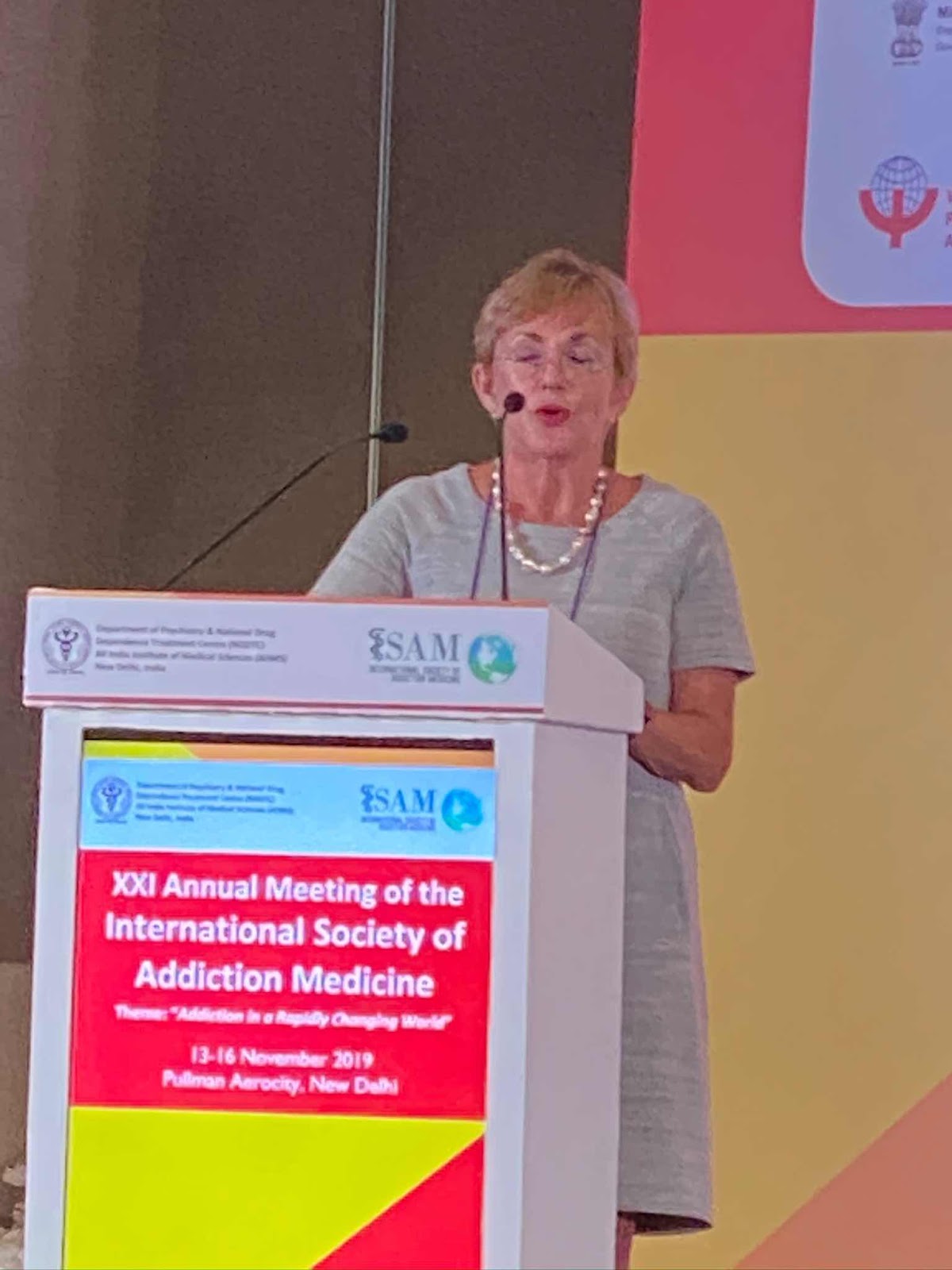
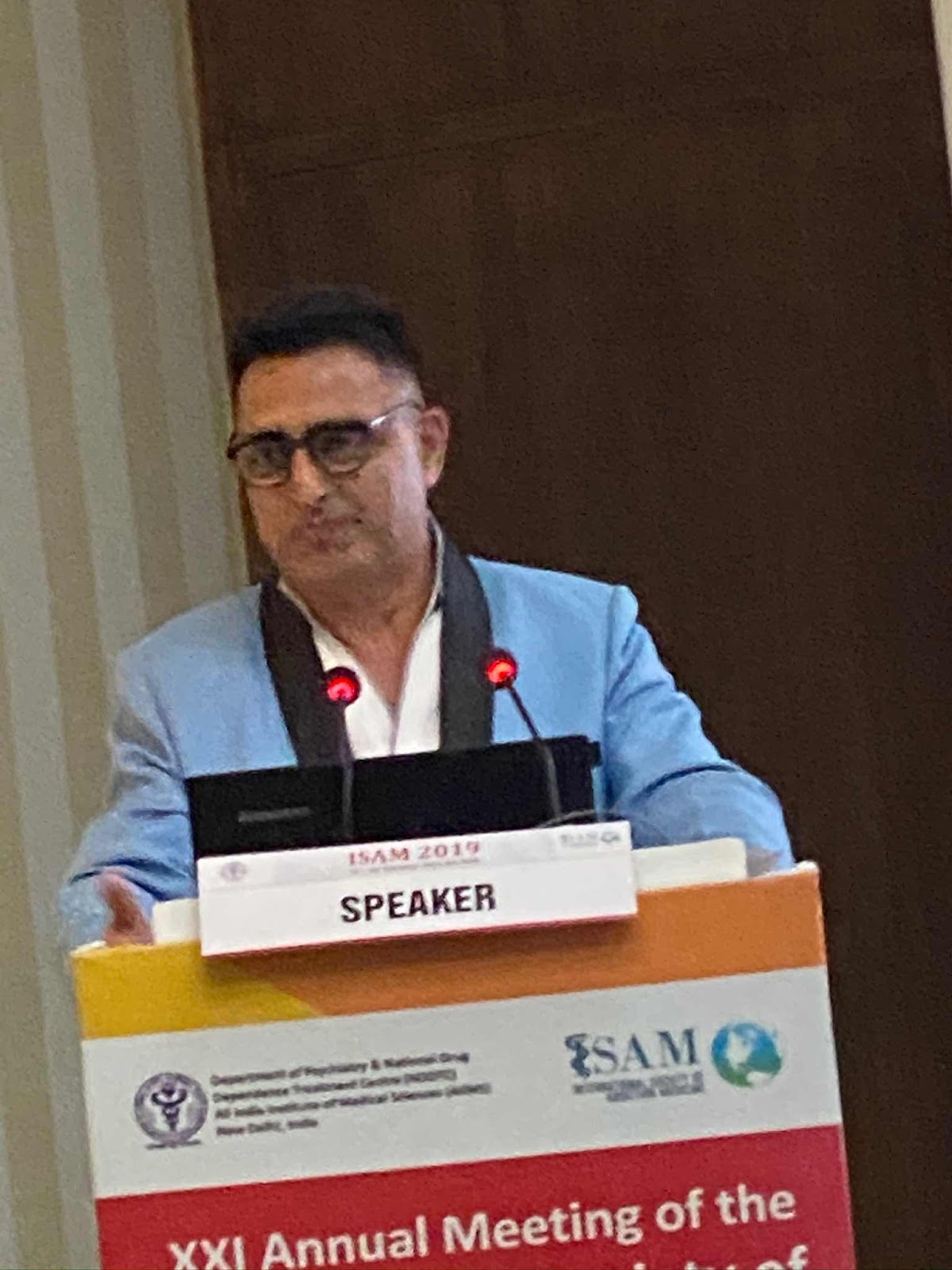
ISAM (International Society of Addiction Medicine) 2019 Delhi India

This conference is truly a best conference.  The Pullman Aerocity Hotel is an excellent location not just for the rooms but also for the venue. Laura loves the elegant rooms with the grand bath.  I’m enjoying their expresso coffee provided by the in room espresso machine,  There’s also excellent wifi and we’ve loved room service.  
The venue is the very best, with a rock star stadium feel given the huge projections above the great stage   Most importantly the sound system is perfect. Given the variety of accents from Indian, English, Scottish to a wide variety of ESL European, this has been crucial for me, my hearing not the best to begin with.  The individual mikes have been working as well so we can actually hear the questions from the audience, a too common problem at so many conferences I’ve attended.
I love the huge Hall 1 but there are maybe a dozen smaller halls where I’ve enjoyed the more intimate setting for smaller group discussions. The lunches have been the best of Indian smorgasboard, a 5 star presentation for the taste.  There have been plenty of lounge spaces for colleagial discussions, often what truly makes a conference for me.  To be able to speak in person to one of the greats like Marc Galanter or RC Jiloha is so very inspirational.  
That said, the real joy has been in the speakers and their presentations, their insights and the evidence based research.  Therre were  dozens of speakers presenting at the same time in the various venues.  Consequently it’s impossible to attend them all though the desire is there.  I loved the presentation on the epidemiological surveys. and extent of the problem in India. 
India is 1.3 billion people, 80% Hindu but with a major mix of Muslims, Christians  Sikhs, Buddhists, Jains,  and others. By comparison United States is 330 million and Canada roughly 37 million. There are countless tribes and huge distinctions by areas of the north, south, east and west, with multiple languages despite Hindi being the official language. The joy for me, a Canadian, in India,  is that so many speak English so fluently, not just the educated by the common people as well.  I love to travel but feel so much safer and understand more when I can understand the people better.
India is a very ancient culture with generally high intelligence, highly educated with multiple languages and broad understanding. The urban centres are 21st century’s yet the rural regions are in places terribly backward.
When I was in Bombay more than 30 years ago that mixture of the space age juxtaposed with the ancient was what so fascinated me. It’s no different today  as my experience in Old Delhi showed, rickshaws and motorcycles.
The presenters surpassed themselves in the most prodigious and thoughtful research. Alok Agarwal reported the problem of heavy episodic drinking in the population with it’s strong association with accidents and fighting. Cannabis use was roughly 3% of the populations but mostly men.  However it commonly coupled with alcohol or other substances.  Opiate use, heroin, opium or pharmaceuticals was roughly 2%.  The telling news was that of those with alcohol dependence only one in 38 had received any treatment and one in 180 had received inpatient treatments. When one considers these percentages are of a billion and more, the actual numbers are staggering.  The size of the problem in India as it is all over the world being recognised by government and industry. The seriousness of it as a true emergency and crisis is evidence based. The costs are overhwelming, the loss of life and productivity are profound.  The surveys show that need and point to where best solutions may be found.  Dr. Pramrod Singh and Dr. Atul Ambekar also contributed greatly. Dr. Ambekar pointed out that cannabis and opium had been traditional and recreational with the British regulating this hundreds of years past but things had changed dramatically. The changes  in use the rise of heroin and disruption of community and family were all discussed at the conference with insights and solutions offered.
The chairs ensured the various presenters remained aware of the time. Consequently the meeting flowed like a river as compared to some meetings where the meeting has the feel of a big city traffic jam.
Psychiatry is commonly envisioned as a biological, psychological, sociological and spiritual field. So each of these areas were discussed. Advances in learning of the disease of addiction, presentation of neuro imaging and neuro pathways along with the various associated diseases ,such as AIDS, Hep C . This was where individual treatments were discussed with naltrexone, naloxones, suboxone and methadone cutting edge presentations.  Psychologically the contributions were more Indian with fascinating insights based on Veda and family changes. At the Social level there were marvellous presentations of treatment centres like Shafa and the whole realm of social psychiatry were discussed. Public health was so important. There was mention of 12 step programs and the loss of the relationships and alienation along with a profound discussion of the Gita idea of ‘attachment’ by Dr. Raju Hejala. He presented that in therapy he was effective in helping his patients see the self as not the drug or the addiction and become detached in their thinking from the addiction. 
Dr Khalsa formerly of the NIH thoroughly discussed the whole controversial issue of Cannabis as a medicine pointing out the paucity of research of the standard that the FDA would expect for a compound to be considered safe and effective. To be fair he presented what good had been found and the massive FDA associated research going on to find cannabinoid products that could add to our pharmaceutical tool box. 
Dr. Bunt did provide the most humorous sides showing the  big business of cannabis in the US with high end marketing and even a psychedelic  ‘church of cannibis’ underling that often for many cannabis is more a religion than anything else.
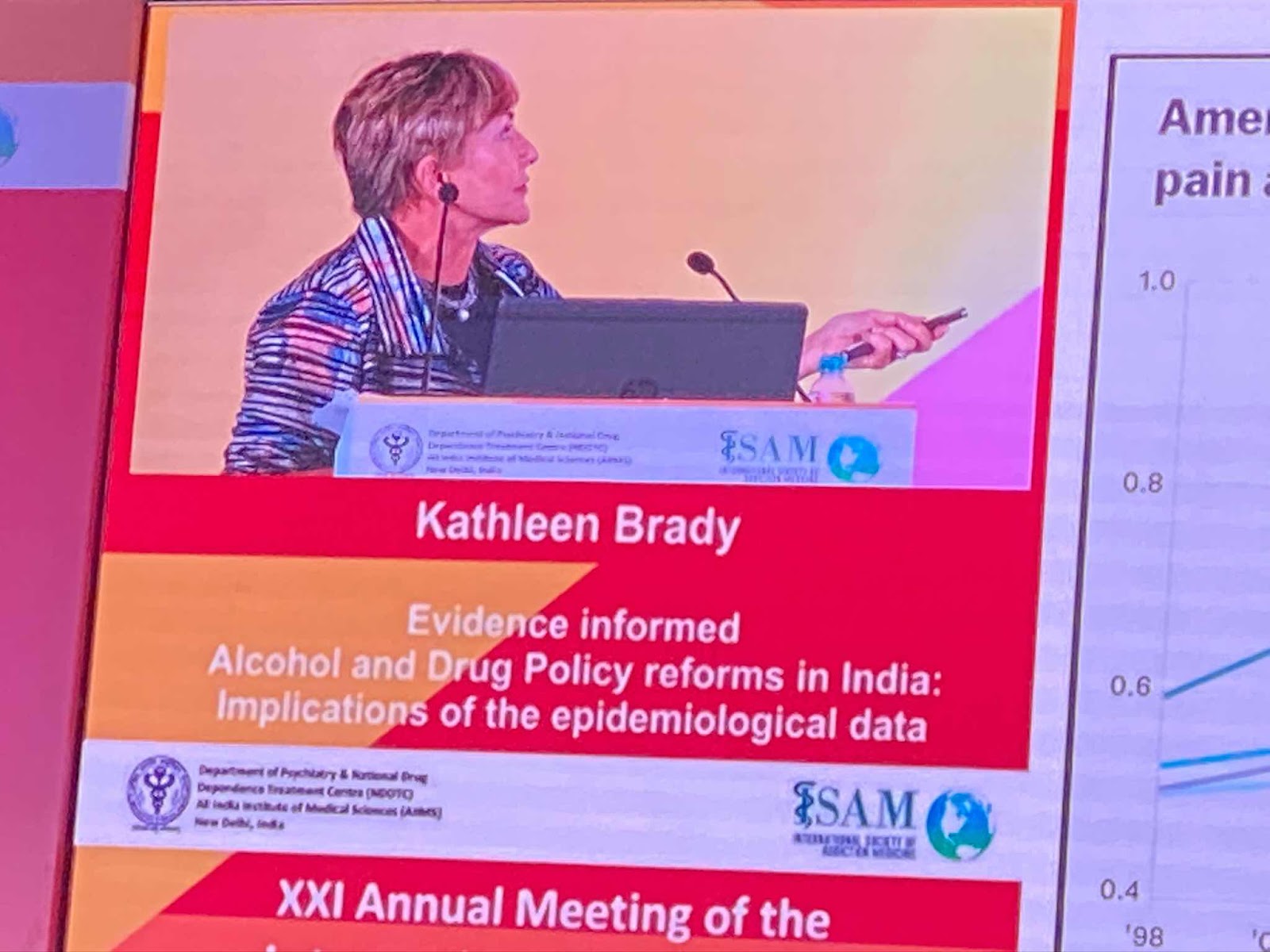
Dr. Nady el Guebaly, Order of Canada recipient and founder of ISAM presented on the need for more research and funding and the history of the rise of the drug problems in parallel to the decline in research funding. The present president of ISAM , Kathleen Brady addressed the issues of the rising crisis.. 
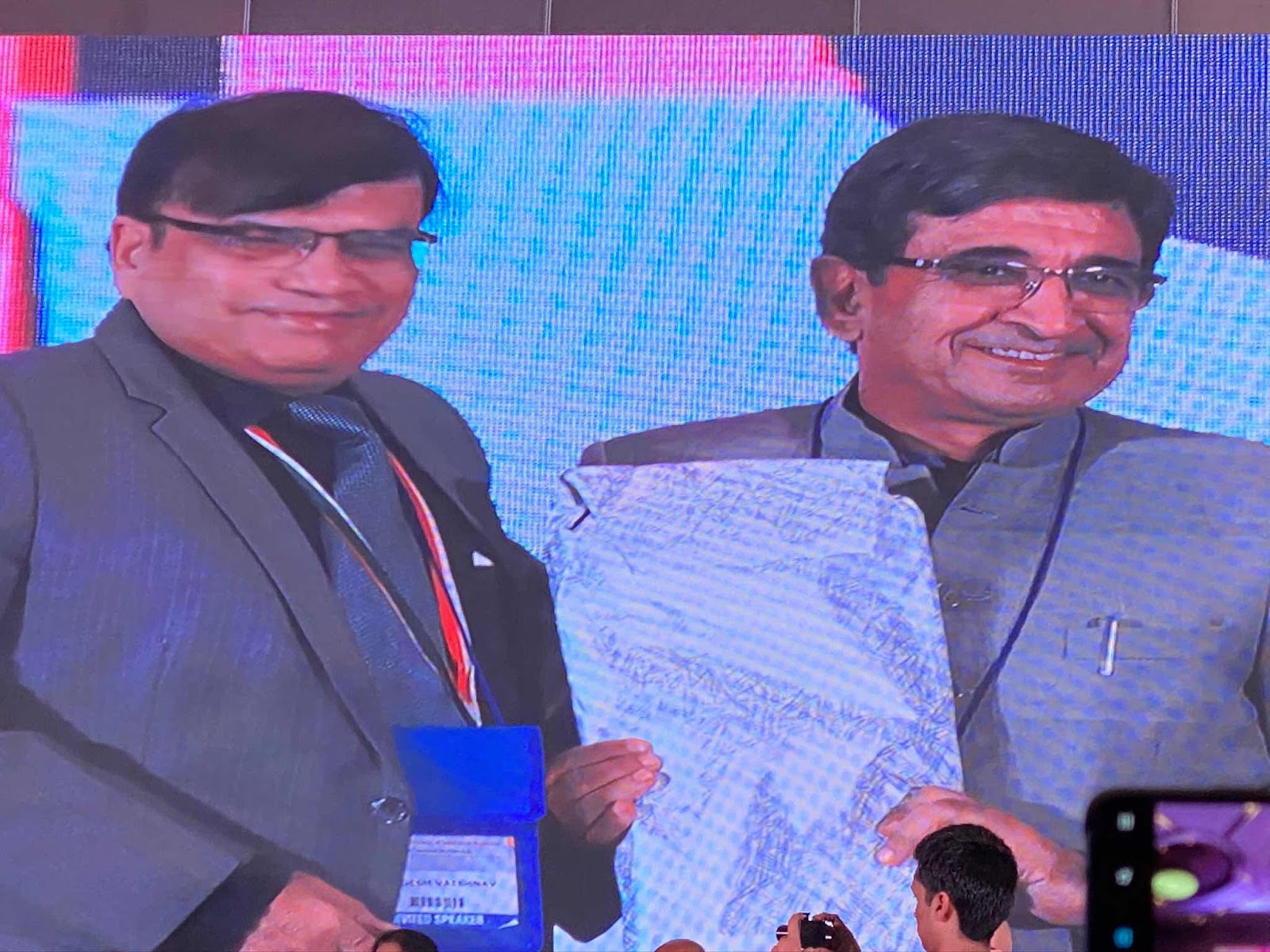
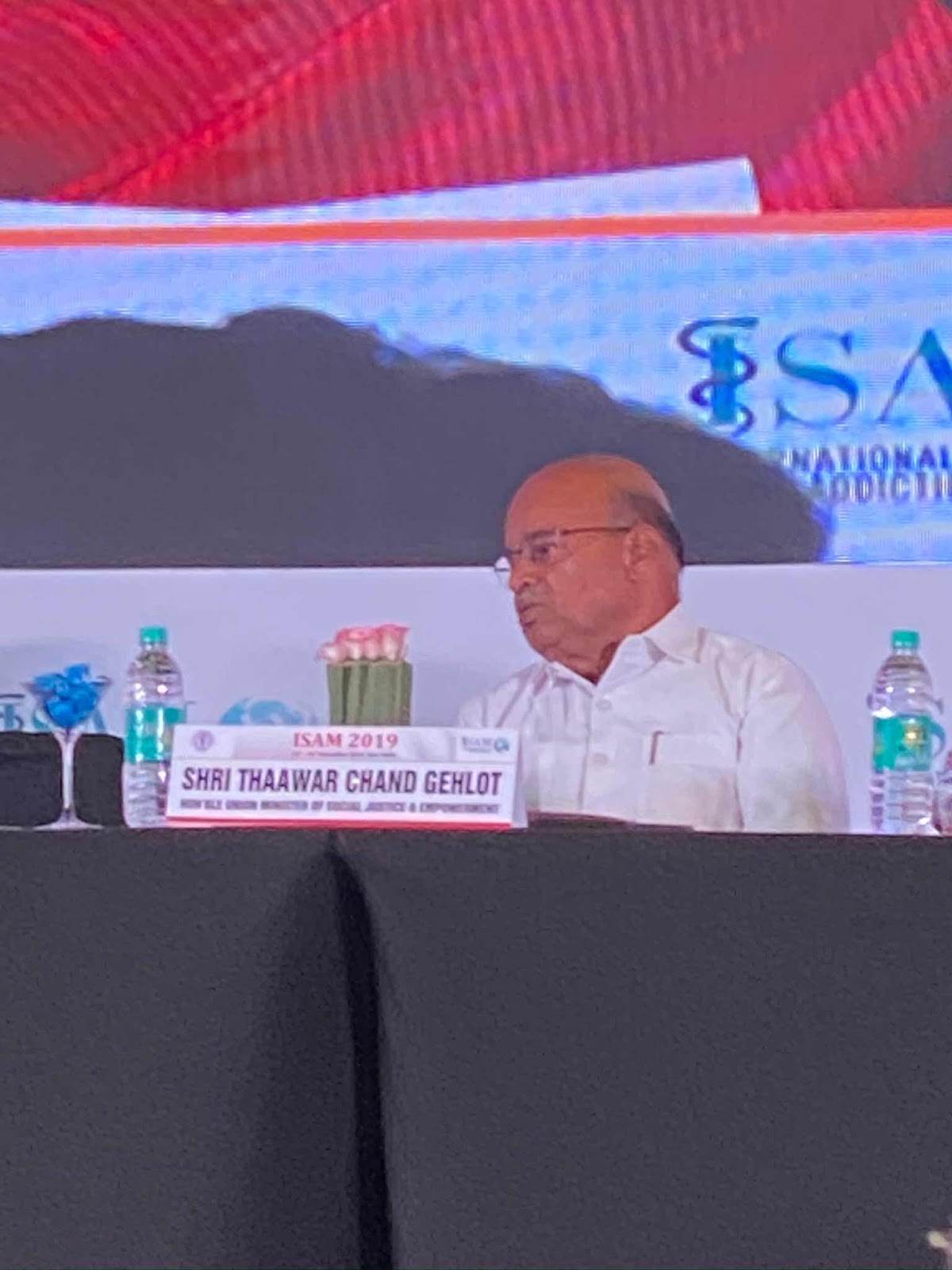
 The Indian Minister the honorable Mr. Gehlot gave a moving speech which was thoughtfully translated and provided in English as a hand out. It spoke so clearly and wisely of the problem and the government commitment
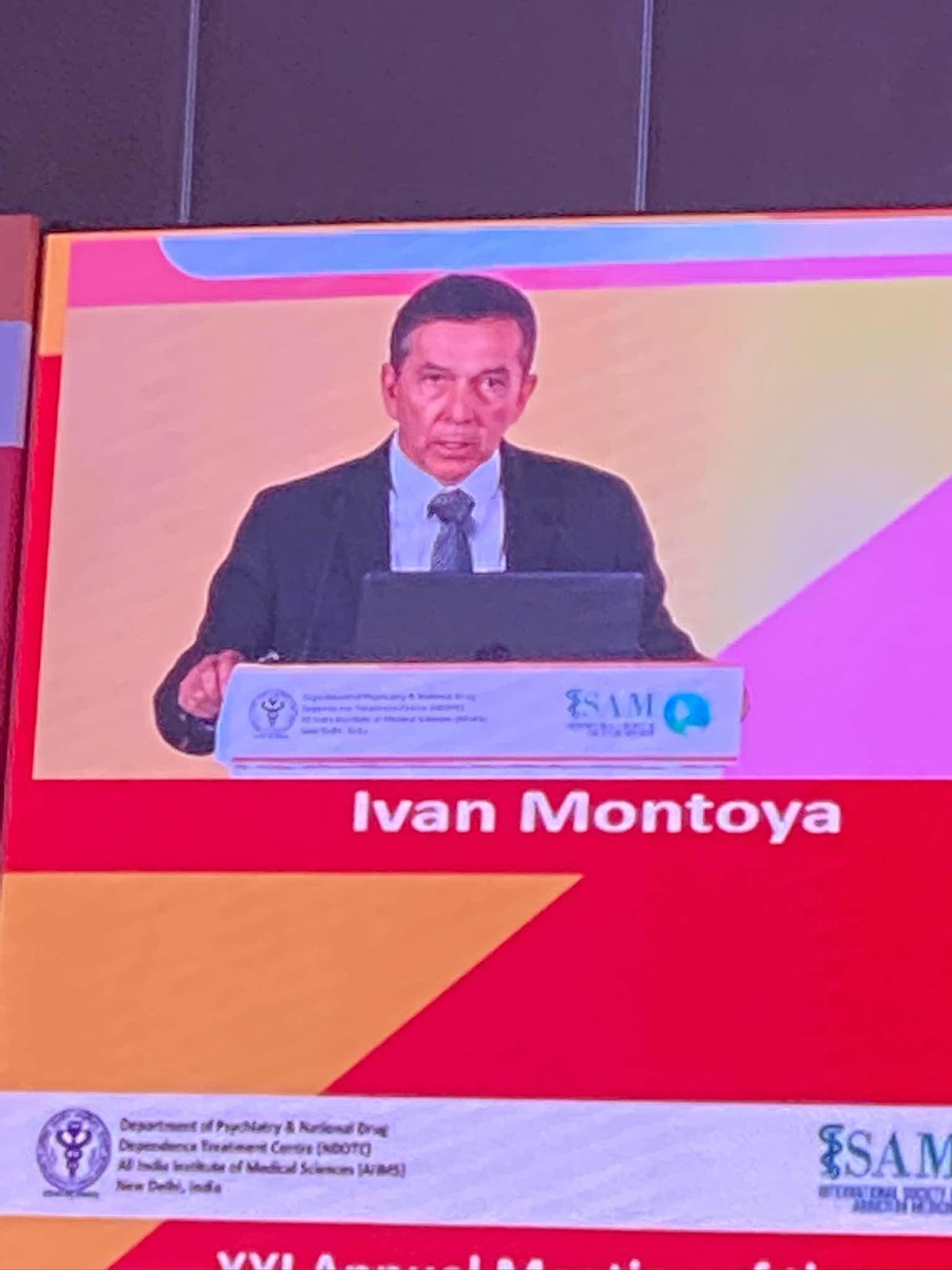
There were hundreds at the conference and I’ve only mentioned a few of the presenters , dozens and dozens speaking to different aspects of the problem of addiction. Dr. Elliott of Birmingham addressed the issue of tobacco use.  Dr. Montoya was especially interesting for me in his clear depiction of the problems and solutions. I was impressed to hear the preserntations on gambling and vaping.  It really was a solution focused conference. Fascinating hearing the remarkable advances in Korea, Iceland and Nepal just as examples. 
I’m missing a presentation now so will shower and get down to more.  So much genius in one location. So much hope too. Working in the DTES of Vancouver Canada in the midst of the fentanyl epidemic with so many young people dying despite our best efforts with opiate replacement therapies and abstinence therapies, it can be dreary.  Seeing and hearing Mr. Gehlot , an Indian Minister to 1.3 billion people speak so compassionately and seriously about the government involvement was uplifting. 
Also I loved seeing the World Congress of Psychiatry, Indian Psychiatric Assocition. Addiction Medicine, UN and WHO representatives at ISAM, all these organizations and more getting together to address this world crisis of immense proportion simply gave me, a lowly clinician, so much hope. I’ve also learned many things I can take back and apply immediately and perhaps make a difference in the lives of my patients who have lost everything to addiction and now are suicidal , chronically and sometimes acutely. For Suicide and Depression go hand in hand with addiction. But seeing the amazing faces of recovery and hearing the heartening successes from around the world was truly inspiring. 


Wednesday, July 5, 2017

Fentanyl Epidemic

“I’m a doctor just like you,” he said.  I knew him in passing.  A good fellow.  Well intentioned. Most of his life a drug addict.  Now he and a friend like two teen agers going fishing patrolled the Downtown Eastside with Narcan kits they got free from the pharmacy.  Instead of trout he caught life slipping away in the gutters. Occasionally, he brought it back with drama and flourish.
“I’ve saved a dozen lives,” he said.
It was good entertainment. He used himself. The suboxone helped him and only a few times a week did he ‘party’.
 “We like the fentanyl because it’s strong enough we can push through the suboxone.” he said.  The patients liked the oral methadone and suboxone because it stopped the withdrawal sickness.  They could have a life separate from the daily grind of finding the money and getting high.
Their faces linger in my memory.  Only weeks ago I saw them.  A couple of young Caucasian women, in their 20’s with boyfriends.  They came as couples to get their opiate replacement medication.
I talk up a storm about AA/NA/SMART, the non pharmacological treatment groups, Detox and Treatment Centres and Recovery Homes..  We really only get paid for the prescriptions. The doctors break into two groups. The rich ones who write a lot of prescriptions and the poorer ones like me who do counselling and try each time to push the patients closer to recovery.
Recovery isn’t Harm Reduction.  Recovery is a proactive program of wellness leading to abstinence from mood altering substances.  Harm reduction is supposed to be a step on the way. But now our Prime Minister is so vocal about smoking pot and all the tobacco company wealth is back in the business of smoke everyone in the DTES is either smoking marijuana or cigarettes or both.  The trouble with drug addiction is that it really dulls the senses and their addiction to smoke is seen as nothing compared to the heroin and crystal meth and crack cocaine.  Then there’s the sex addiction, gambling and pornography and crime.  It’s a smorgasbord of free choice in the DTES.
But mostly they tell me they don’t want God or any of that spiritual or religious stuff.  They want drugs.  Addicts are materialist hedonists.  They are sometimes even like the monkeys we studied back in school with the electrodes in their amygdala pleasure centre who would live to pull the lever of pleasure.
More and more they tell me they don't want any of the recovery options. "I just want that free heroin. Can you direct me to where I can get my injections for free.  I don't want to stop using. I just want to get the stuff free."
Each of the women was demure with whimsical smiles and street smart eyes. College drop out. They’d been into opiates only for a year or two at most. They’d started with pills they got at parties and then became hooked. With their boyfriends they now needed fentanyl pills every day, at least one or two, sometimes more. They ground up the pills and snorted them.  They smoked marijuana too.  A lot of the marijuana had been sprinkled with fentanyl so the herb was hurting folk bad.  Even the organic shops marijuana had been tested and come back positive for fentanyl. I imagined with the fentanyl so cheap dealers were going about sprinkling powder here and there to increase their clientele.
Drug dealers are lizards who want to be your friend.
The Fentanyl was coming from China.  It was sold on line and brought in over the border en mass.  My hypochondriac patients complain that it and crystal meth are in the air in the DTES.  The paranoids are afraid of the food outside in the markets. They’re crazy but no more so than the neighbourhood.
It’s just that their faces linger. The two women from last month. I've mostly forgotten the patients that died before them.
Sometimes I remember Gordon Lightfoots song, “Only a go go girl in love with someone who doesn’t care.”  I think of their mothers.
They’re dead now.
Their boyfriends each on different weeks came in and told me the same story.
“We got high together and overdosed.  I woke up but she didn’t”.
They were sad but it hadn’t changed their own drug habit.  If anything they did more.  Running from the demons. Burying the pain.
“Sometimes you see the shadows out of the corner of your eye,’ the older guys tell me.
I talk about higher power and participation.  I repeat till the cows come home that it’s a disease of relationship and that they have to find a way to associate with people that don’t use.  I hand out pamphlets and point them to all the different groups and services that we have.  The government pays for drug and alcohol counsellors but it’s like getting adolescent boys out of gangs, one on one care doesn’t work. They need a new group, a new club, a new association.  Their religion is addiction. They see their drug as god and their dealer as their priest.  It’s high ritual.  The language doesn't tell you that but it's there as bold as the body bags.
I ask him if he’s stopped using.
“Not yet. “ he says telling me about the great feeling saving a life gives him with his free narcan kits.  I think of it as band aids.  It’s like a lone medic in Afghanistan. Every life counts.  Don Quixote charges another wind mill.  There has to be a Dulcinea.
I expect the feminists would call me chauvinist because I remember those two women more than the half dozen more young men I’ve known who are just as dead in these last few months.  It’s wrong to even speak of gender. Freedom of speech is dying as quickly as youth.  It's only okay to speak of what we're told to speak.  Designated truth or fake news.  More illusion of choice. There are so many divisions today.  I worry I’ll offend someone even by asking them to live. The Prime Minister is proud of his new physician assisted suicide programs.  They’re opening more and more needle injection sites with dilaudid and some are even giving free heroin.
They once assisted the Tong, Euro Gangs and Hell’s Angels who brought in the Heroin profiting by the government taking care of providing drug clubs, keeping their business alive with safe injection sites  and carrying all the costs of bad drugs.  Now they’re actually going toe to toe with pharmaceutical grade product versus the ‘shit they call down’, the gangs provide.
“It’s not heroin anymore.  It’s not been for a long time. Synthetic shit. That’s why the fentanyl is attractive. Cheaper and it does the trick better.” he said.
The uppers go with the downers.  Jib, or crystal meth is everywhere as well. Not as much crack smoking as doing jib these days.  There’s a lot of doing jib then heroin to get to sleep and then getting onto straight heroin and maybe cigarettes or pot. After the drugs get happening big time the alcohol which may or may not have been there in the beginning becomes less important.  Some say drugs account for 80 or 90% of the material theft.  The insurance companies are not suffering.
Legalization which is what our Prime Minister was pushing means that a drug could be sold in a school candy machine. If it’s legal, it’s legal. Like mother’s milk.
Decriminalization is accepting the disease model and treating the whole matter not as a moral issue but rather as an epidemic.  Harm Reduction, really palliative care, a term with a marketing twist came out of the cancer treatment and then the Aids Epidemic.
Harm reduction may not be that good for the individual. Individuals do best if they get into AA or NA , treatment, recovery houses or join a church.  When they look at people 20 years abstinent individually they mostly work,  belong to spiritual organizations and have replaced their previous habit with community participation and love.  Love of God, love of family, love of fellow man and woman.  Drug addiction is at best mental masturbation.
The Harm Reduction is good public health and ultimately may be preventative as the profit in drug sales moves into the public purse. It’s hard to say if there’s any less gambling today but the government gets the money rather than the Mafia.  Now one then wonders what’s the difference between public sector crime and private sector crime.
But I’m a medic in D Day and the enemy in this case, the drug dealers, they don’t provide medics for their ‘side’.  I still think I'm on the good side. I just don't know some days if I'm doing righteous work or enabling.  There’s a whole lot of other types of medicine I could do.  But I’m down here in the DTES with more and more young people. When I began in the 80's working in a detox the clientele was mostly in their 50's.  Not a lot of really old people in this work.  Living past 60 not so common here as in the suburbs.
My patient is going off with his buddy to look for more bodies in back alleys in hope he can revive them.
I’m just doing what doctors do, pushing life, where the profit always seems to be more in pushing death.


Tuesday, September 29, 2015

Doc-Side Medical Clinic

Dr. G. Horvath has had  low key Downtown East Side medical clinic for many years. A family physician with advanced training in physical injury and addiction medicine, he manages this 'walk in clinic' as well as maintaining a methadone/suboxone clinic.
As an addiction psychiatrist I met him when I was licensing to provide methadone treatment. One of the most respected clinicians in the field he commonly trains new physicians in the addiction medicine practicums.
Licensed now in methadone treatment and well credentialled in psychiatry and addiction medicine,  I was actually happy to continue to work  at Doc-Side clinic if only because Dr. Horvath is an excellent colleague who is glad to share his knowledge on complex cases.  He's a doctor's doctor, a consumate clinician, caring and extremely conscientious.
I've worked here five years now.
In addition to managing methadone patients a couple of afternoons a week I provide psychiatric consultation to addiction medicine patients one morning a week.  This is possible because if patients don't show for an appointment the clinic has a 'stand by' arrangement so I'm able to work and not lose income.
Private psychiatrists who make up over 75% of psychiatrists tend to be cautious about seeing patients with drug or alcohol problems because this group is notorious for missing appointments. When a patient misses the appointment the doctor doesn't get paid. Since we're all running businesses with overheads of roughly forty per cent, drug addicts and alcoholics, often the most in need of psychiatric services, fall between the cracks.  Further the DTES patients are no able to pay the 'missed appointment' fees that the better heeled carriage trade can.
The other 25% of doctors work  in salaried positions with all the benefits. The public mental health programs have physicians as 'consultants' but mostly the patients see counsellors.  The 'team' approach is ideal to care but patients complain commonly about a variety of factors, some of which might well have validity.
At Doc-Side medical there is an Administrative Assistant and two or three administration personnel maintaining records, ensuring clinic payment and managing medication timing and urine testing.  The clinic costs at a methadone clinic are substantially more than a regular clinic because of the urine testing, random urine testing and required provincially mandated rules for clinic maintenance.
In British Columbia there are three forms of methadone license.  A physician or psychiatrist may have a license to prescribe methadone for pain. Methadone is a potent long acting narcotic that has specific benefits and use in oncology and palliative care as well as other areas of medicine.  I have this license but while I prescribe narcotics occasionally for pain haven't had a major pain practice in which I'd be using that license for this purpose.  Other narcotics not requiring special license are usually sufficient for most doctors who don't 'specialize' in pain areas specifically.
The second methadone license is that for prescribing methadone in a Methadone Treatment Clinic.  All the doctors working in methadone maintenance programs must have this special license and must in addition to academic training, have a day at least of apprenticeship experience with a senior methadone doctor.  Dr. Horvath, as an acknowledged leader in the field of heroin addiction and methadone maintenance is such an individual
The third methadone license is a clinic license.  Dr. Horvath, having a license for methadone maintenance also has a license to run a methadone clinic.  Methadone maintenance programs in the province are run out of clinics.  I and a half dozen more doctors who have a methadone prescribing license rotate through Doc Side Medical Clinic.  The requirement for a methadone doctor to have a methadone clinic license includes extensive experience and standards of excellence in their history of medical practice.  Others, such as pharmacists may obtain a 'methadone clinic' license, I believe, but the process is rigorous.
Because addiction is often associated with a higher risk lifestyle, from a public health perspective there is increased concern for communicable diseases and trauma associated illness.  There is further a very high overlap between addiction and alcoholism and co morbid psychiatric disorders.
Since working in the clinic I've treated all manner of psychiatric disorder, from gross psychosis, schizophrenia, neurotics, psychopaths, sociopaths, personality disorder, Bipolar disorders, Traumatic Brain Injury, Paranoid Disorders, Disocciative Disorders, Anxiety disorders  and alot of PTSD.
I was a supervisor in the Vancouver General Hospital Psychiatric Emergency so the psychiatric conditions are well within the range of my subspecialist training and experience. What is difficult about the work is the overall lack of resources.
Two of my suicidal depressed patients went to the hospital last year only to be turned away. They hung themselves. I don't fault the ER because the threat of suicide is high with alcoholism and addiction.  I only wish that I was there and  grandiosely hope that I might have stopped my patients from premature death.  Working with addicts and alcoholics I've seen more death than when I worked with HIV patients.  Suicide is difficult to deal with an I know many psychiatrists who have avoided the high risk areas choosing more boutique practices where patients are less suicidal and have more resources available to reduce the risks.
What I find interesting though here is the burden of physical illness I encounter.  The other doctors I work with, like Dr. Tsung and Dr. Kljajic are excellent family physicians like Dr. Horvath.  They have excellent cutting edge diagnostic and therapeutic knowledge .  I was a country family physician and treated the physical illness of many patients in my psychiatric practices but it's been often years for me in terms of therapeutics. I daily look up the latest treatments and often have luxury of asking one of my esteemed colleagues their opinions.
 Diagnostically I believe I'm far better than I was as a young doctor, simply because of experience.  I did appreciate asking my colleague when I saw a classic case of erysipalis.  Thankfully he knew what it was and what the treatment was.  I just recognised the pathology  but couldn't remember the name and treatment.  I am blessed with having seen so many patients I know 'normal' and am very alert when I see 'abnormal'.   The forms of cellulitis here are very variable. Last month I diagnosed a new TB case. Hep C is prevalent. I have several HIV patients.  Among ourselves invite each other to listen to heart murmurs and observe unusual patholgy. It's a joy working with other clinicians.
Only last month Dr. Horvath diagnosed a pulmonary embolism we all auscultated.  Last year I sent a patient to cardiology with myocarditis because the heart sounds were abnormal. We've felt our share of abnormal livers so don't bother each other with those.
 Every patient entering the Methadone Program gets a complete physical and standard screening laboratory and hematology testing. So we pick up our fair share of anemia and hypothryroidism.  I diagnosed a cancer last month sending the patient for confirmatory xrays and onto the appropriate sub speciality clinic at the hospital. I appreciate asking the other doctors who work on the same days I do their opinions and they seem very happy to have my psychiatric input on some of their more unusual patients.  Psychopharmacology is second nature to me as is physical pharmacology to them.  We do see a lot of trauma and order a number of ultrasounds and xrays. Dr. Horvath's orthopedic training has been as helpful as my rodeo doctor experience in diagnosing dislocations. Addiction obscure symptons and often patients aren't that good historians because of mental illness. So it all helps.
Methadone clinics reduce crime and disease spread by stopping the theft and sex trade that so often goes with addiction. But it's especially good for it reduces and stops illicit needle use. Doc Side Medical Clinic is a major unsung public health resource in the Downtown East Side,
In addition to the medical and administrative staff with patient follow up and administrative close contact with pharmacies we maintain a close collegial relationship with the various housing assistance programs, the major local detox programs such as Harbour Light  and the long term facilities such as Union Gospel. We're also fortunate to have a very good relationship with Vancouver's outstanding "drug court".   We encourage attendance in peer support programs such as NA and AA and the new SMART group programs routinely.
Presently there is a counsellor associated with Doc side who is here half the week. He's highly informed about various resources and has been most helpfull getting patients a variety of services. He's assisted people on the methadone program finding housing, getting rape crisis assistance, advocacy and as well provides both Cognitive Behavioural Therapy and Mindfulness Meditation Therapy for patients.
All we're lacking from my perspective is an outreach community nurse.  When a patient misses their methadone for three days the dosage must be lowered to the starting dose because of fears over overdose.  The pharmacists keep a record with computers of 'reversal' of methadone dosage. If a person were to miss 2 dosages an out reach nurse could find out what the problem is and hopefully arrange for the person to get their methadone rather than being lost to follow up. It's the one major disruption in care that often results in the patients ongoing relapse.  Relapse is common with addiction but the key is ensuring that the person gets back into the program as soon as possible. Further we have patients with major medical and mental health issues who just fall below the radar. A community nurse could follow up with a home visit to see what the concern is.  It's sad to say but patients have been found dead in tenements after days. This could be preventable.  I think of my patient who had a heart valve issue and simply with the winter cold didn't have the energy to get out to the pharmacy.  With a community nurse we would have found out early rather than late.  Just like my schizophrenic patient who became psychotic and afraid to leave his room when he stopped his anti psychotic medications.  The drug dealers sell door to door and do deliveries so we're commonly 'competing' with 'saving souls' from the lowest forms of drug dealers. It would be nice to have the resources.
Increasingly addiction is being conceptualized as very like an infectious disease. It 'spreads' through neighbourhoods.  This is especially true with young people.  A drug dealer will show up at a school or workplace or construction site also and slowly 'push' to a widening circle of addicts. It starts as 'recreational' but the aim of the dealer is to find the vulnerable because addicts are major cash cows.
The good news is that Recovery is even more 'infectious'.  For most of my patients , I am the only person they really get to know who is 'clean and sober'. They get to know the staff and counsellor then the pharmacists and slowly a widening circle of people who are normal surround them.  It's further recognised that physicians have a great deal of importance in initiating behaviour change.  It's no surprise that the Big Book of Alcoholics Anonymous 50 years since it's inception continues to start with the Doctors Opinion. A day doesn't go by that my colleagues aren't promoting smoking cessation and working here I see every once and a while their gargantuan efforts pay off.
Drug dealers are death salesman and they pile lies upon lies. Commonly patients are grossly misinformed about addiction and alcoholism. The methadone clinic is commonly their first contact with the recovery movement.
Thanks to the leadership of Dr. Horvath , all the doctors who choose to work at Doc Side maintain a recovery focus.  We encourage people to change their life style and get better health care and move onto abstinence based programs such as Narcotics Anonymous. We encourage patients to get into 'safe' housing.  We discourage crime. It's a great atmosphere to work in.
Research has shown that patients who are in well run methadone programs will tend to progress out of the sickness and criminal life and back to work and health and better social relationships by 2 to 3 years in methadone treatment programs. By contrast patients who continue to use heroin IV on the streets may be dead in that time or have acquired more chronic lifestyle related diseases. We also detox mostly younger patients over months from shorter addictions to heroin and other narcotics. Increasingly Suboxone has helped in this regard.
By contrast there have been reasonable criticism of some methadone clinics where the doctors and pharmacists were running a 'drug pushing' factory.  The patients were seen as 'customers' and the pharmacists especially didn't seem to want to lose the high priced drug sales that are associated with methadone maintenance programs.
The College of Physician and Surgeons of BC and the College of Pharmacists of BC are both involved in tight regulation of the programs overseeing training and maintenance. Personally critical of some of the highly expensive and destructive aspects of political correctness in government bodies I've only seen the finest work done by the College in this field.  The Colleges even have 'sting' operations and work closely with the Vancouver Police and RCMP to manage the programs. Just this summer 46 pharmacists and pharmacies lost their licenses to dispense.  Every once  in a while too a doctor is reprimanded for mostly negligent work. Dr. Horvath is asked, for instance, to review the work of colleagues and other clinics to ensure their records and management are at the standard set by the Colleges for this program.  The Colleges much to their credit run a very tight ship.  The area of addiction is rife with potential for abuse and corruption so I've grown to admire those in the College that ensure these programs run with excellence.
So Doc Side Medical Clinic is this rather low key clinic doing a rather large amount of work in an area of greatest need. There are other methadone clinics nearby where friends work  too.  I know they're 'run' with the same concern and consideration that Dr. Horvath shows. We often run into each other in the regular continuing medical education events for addiction medicine we attend each year. Most of us are certified with the Canadian Society of Addiction Medicine which maintains the highest standards of care.
Methadone clinics, especially the well managed ones, are often under appreciated and not that well understood. There are no Doc Hollywood  working here, that's for sure.  I daily see the work and it's paying off with time. I see the benefit.   Because we cover for each other I see my colleagues work and talk with their patients.  I especially appreciate the work of Dr. Horvath and the other doctors he's attracted to working in one of the most difficult areas of medicine, in one of the most notoriously difficult areas of Canada.  Doc Side Medical Clinic serves the the Down Town East Side of Vancouver (DTES).  

Wednesday, December 24, 2014

Christmas Eve

I'm working Christmas Eve. Here in the Downtown Eastside Vancouver.  I'm seeing addicts who have chosen a different direction in life.  Leaving injection adulterated heroin and the darkside they've begun their journey of recovery taking oral prescription methadone.

"Methadone is a godsend,"  my patient just told me.  He's looking to return to work.  No longer fearing the deadly diseases associated with IV drugs, he's looking to return to work in the New Year.  "I couldn't work."  Heroin had taken over his whole life. Now he has a girlfriend whose also on methadone and they're celebrating Christmas together with turkey dinner.

So many of my patients have had the last dime of their money taken by the drug pushers.  Drug pushers are sad.  At the top of that dung heap is the guy addicted to money. At the bottom is the guy whose psychopathic devolution is such that he'll enslave his fellow man for his own comfort.  Most of my patients are just victims.  They used their welfare checks, turned tricks, gave blow jobs to bullies, did petty crime. When they'd had enough self abuse they walk through the doors of Doc Side Medical Clinic on Main Street.

There are other such places.  Clinics where methadone doctors are licensed to help this marginalized population of ill.Some start their journey going to NA and AA.  Others start here , stay on methadone maintenance like any other medication but become abstinent in all other regards, return to work and families, pay taxes, and return to law abiding citizens remembering their days of addiction as a bad nightmare.

Right now my friends are helping the homeless with coats and food.  Many of those helping once had addictions themselves. Not all homeless have addiction. Too many of the homeless here are those sad and tragic people who because of mental illness were well cared for in state mental institutions. Now those have closed and too many of the mentally ill are the prey of the drug dealing predators, those parasites on society.  Too often I see the families of the mentally ill who can't wrest their loved ones from the representatives of organized crime.  The police do all they can.

We do what we can.

(Patients come and go. It's steady.)

Christmas eve is the lowest time of the year.

In the morning we will celebrate the Birth of Christ.  Hope for a new age. The promise that another year will come and life will move forward.  In pre Christian days the winter festival celebrated the hope of the new year.

The crocuses come out in February here, at latest March.  Patients seem so low then at some nadir they rebound and come back as if from the dead.  Dark night of the soul.  The 'bottom'.

The New Year comes that way.  This year waning.  The light dwindling.  Then the return of the sun.  My generation's Beatle song "Here Comes the Sun!" celebrates the spring as none other can.

The renewal.  The new beginnings.  And a baby cried in a cradle.  A new age began.

There is hope.


Sunday, October 19, 2014

CSAM - Canadian Society of Addiction Medicine - 25th Conference - Ottawa - October 2014

Evolving Perspectives on Addictions (Perspectives Evolutives en Dependences)” was a great success with participants from accoss Canada and the United States.  President Ronald Lim and Conference Chair Paul Sobey,
DSCN2600combined with many others to make this educational experience at the Marriott Hotel clinically extremely beneficial as well as addressing evolving controversies.   Having a Methadone Clinic to attend at Dr. Gary Horvath’s DTES Vancouver Doc-Side Medical Clinic on Wednesday I didn’t make the first day though heard it was extremely well received. All the research and scientific advances in the study of electronic cigarettes and marijuana smoking were addressed.  Thanks to Paul I was emailed   Dr. Mark Wares latest paper.
Dr. Alan Budney , President, Division SO American Psychological Association presented on new regulations related to Marijuana.  Dr. Peter Selby updated the group on Motivational Interviewing.
All of the slides and references for conference are available on the CSAM site.(www.csam-smca.org/Office 403-813-8217)
Dr. Jeffry Turnbull, medical director of the Inner City Health Project, Ottawa presented on evolving psychosocial approaches to Addiction treatment while Dr. Tara Tucker addressed the critical issue of Compassion Fatigue.
Dr. Kim Corace, Director, and Dr. Melanie Willows, Program Development and Research in Substance Use and Concurrent Disorders Program, Royal Ottawa Mental Health Centre, spoke on Bridging Research and clinical Practice:Key Strategies to creating innovative addiction treatment services.  DSCN2596DSCN2597DSCN2598Their presentation addressed the need and importance of the Hub and Spoke Partnership Model, the networking involved and how to get key players involved in the coordination of effort.  It was clear that a whole lot of work and effort had gone into the obvious successes of this remarkable program.
Mel Kahan,DSCN2602
Medical Director, Substance Use Service, Women’s College Hospital, spoke on the Rapid Delivery of Addiction Medicine Service to patients in Detox Centres and Hospitals: the H-SOAP project.  Dr. Kahan is truly one of my favourite ‘rock stars’ of Canada’s Addiction Medicine. His program identified that addicts with their particular series of crisis needed to be deal with  a hospital based service that was responsive to emergencies, psychiatric and internal medicine wards providing the critical cost saving and clinically relevant service at the time they’re needed not weeks or months later.  With his vision and experience he has developed a working model in his community that is practical, profitable and very timely indeed.
DSCN2613

DSCN2614

DSCN2615
Dr. Corey Waller,DSCN2638 Medical Director of Spectrum Health Medical Group Centre for Integrative Medicine presented on the major news topic of Prescription Medication Abuse. He was a very exciting speaker with humour, anecdotes and challenging considerations for advocacy at the highest levels.  

DSCN2641
DSCN2642

DSCN2643
Dr. Marie-Eve Morin DSCN2653was a true delight presenting in French on the topic of the Doctor as Drug Pusher.  The conference had provided electronic sound devices for the real time translation of her superb talk.  My french is rudimentary so I really did appreciate this assistance and knew my American friend was loving this ‘international’ aspect of the Canadian conference.  Dr. Marie-Eve Morin’s reviewed the problems of prescription drug abuse, the history and recognition of these in Quebec and the advances in addressing the issues her and her associates had made.   It was a thorough and riveting presentation. C'est bien! Magnifique!
DSCN2657Dr. Beth Sproule,
Clinician Scientist, Centre for Addiction and Mental Health, presented on A Case for Pharmacists and Prescription Monitoring Programs , Decreasing the Harms from Prescription Drugs.
DSCN2660DSCN2662


DSCN2665
DSCN2669Dr. Melanie Strike’s presentation was very well received, a very revealing presentation of clinically relevant research and insights that really did touch the core and complexity  of concern in the front lines of therapeutics.
DSCN2667

DSCN2670


DSCN2673DSCN2674DSCN2681
DSCN2687Dr. Nady el Guebaly, the humble leading light of  International Addiction medicine has just published the definitive textbook of addiction medicine through Sprinter.com (ordersny@springer.com) “Textbook of Addiction Treatment:International Perspectives” Nady el Guebaly, Giuseppe Carra and Marc Galanter.
Dr. Nady el Guebaly introduced Dr. Ivan Montoya, National Institute of Drug Abuse (NIDA, Director, Practice Research Network, American Psychiatric Association. Dr. Motoya did a comprehensive review of the evidence based research on pharmaceutical treatments to date and introduced new treatments ongoing and/or under review.  This was a very exciting look at the possible future of pharmacotherapy with it’s attendant hope for those still suffering.

DSCN2694DSCN2696DSCN2697


DSCN2698DSCN2699DSCN2702


DSCN2708DSCN2710DSCN2712DSCN2713DSCN2718DSCN2723DSCN2724DSCN2726DSCN2729DSCN2730DSCN2733DSCN2736DSCN2737DSCN2739


DSCN2742DSCN2744DSCN2749
Monica Bawar, PhD Student,  Neuroscience program, and Brittany Dennis, PhD Student, Clinical Epidemiology and Biostatistics, McMaster University, presented an elegant study on Factors Affecting Treatment Outcome for Patients Undergoing Methadone Treatment for Opioid Addiction: A Focus on Sex Hormones and Chronic Pain. I was delighted personally to learn from this research that testosterone levels are related to dose of opiods and that there didn’t seem to be any evidence that one opioid acted differently than others. My methadone patients occasionally complain of reduced libidido when they start treatment which struck me as strange because most of the heroin addicts in general complain of lack of libido secondary to any opiate use.  Heroin has never been considered a sexual performance enhancing drug so it was helpful to hear the detailed work of these researchers who also addressed how factors of chronic pain might well contribute to relapse in methadone patients.

DSCN2779
DSCN2780DSCN2797
DSCN2798

DSCN2807


Dr. Andrew Smith, Staff Physician, Pain and Addiction Medicine, CAMH presented on Partial Agonists and Half Truths: The Use of Suboxone in the Treatment of Chronic Pain. Dr. Smith’s presentation was a most interesting case presentation with remarkable insights and developments that spoke well to the true complexity that clinical practice presents.  It was really helpful clinically to see how an otherwise difficult and tragic case of a highly successful individual with chronic pain could be best  addressed. The use of Buprenorphine was critical in the resolution of the case which had a previously hard working man utterly prostate with disability but with appropriate care back at work and doing the recreational activities that they so enjoyed. It really did speak to the miracles that we all have seen in this difficult but rewarding work.
DSCN2818
DSCN2820
“What’s New in Hep C” talk by Dr. Curtis Cooper, Director, Ottawa Hospital Viral Hepatitis Program, was a fascinating  simply for telling us about the facts and success of the new and highly effective treatments for Hep C that are now available. The difficulty that remains is getting the funding for these truly historic advances. DSCN2821
DSCN2822

DSCN2823
DSCN2824
DSCN2825
DSCN2827

DSCN2830
On this positive note with a celebration of all the new research and advances in the exciting cutting edge field of addiction medicine, the conference closed. Next year’s conference will be in Calgary Nov. 5-7 at the Coast Plaza Hotel (admin@csam-smca.org)
Personally I was delighted to buy Dr. Merville Vincent’s book, Diagnosing and Treating Addictions, An Integrated Approach to Substance Use Disorders and Concurrent Disorders.  Ms McCullough, now in Toronto with Edgewood,  formerly of Vancouver was in the welcoming room when I arrived. It was great to see her again.  Dr. Vincent, psychiatrist with Edgewood is one of the best clinicians in the field but also a very clear thinker in what can often be a fuzzy area. His lectures have always been well worth the effort to attend.
I was equally delighted to actually see Dr. Nady el Guebaly’s Textbook of Addiction Treatment:International Perspectives.  Copies were present for perusal but we couldn’t buy them on sight but had to order from the publisher.  Seeing them was worth the wait as all of us in Addiction Medicine have been looking forward to this comprehensive text. This book had been the talk of the Kuala Lumpur Addiction Medicine conference I'd attended last fall. Now I’m waiting for my copy to arrive and many hours of enjoyable reading this winter.
 For the flight home I was thankful to obtain the latest Canadian Journal of Addiction, the Special Edition: Medical Marihuana: Furthering an Objective Debate. Given all the nonsense in the media and the lies perpetrated by those with  major conflict of interest I’m looking forward to reviewing the truth and science of the matter.   The journal has  articles  by Dr. Nady el Guebaly, Harold Kalant, Mark Ware, Meldon Kahan, Shery Spithoff and Anna Reid.  What a great read this will be.
Thank you CSAM organizers and presenters. What a great conference! A bientot!